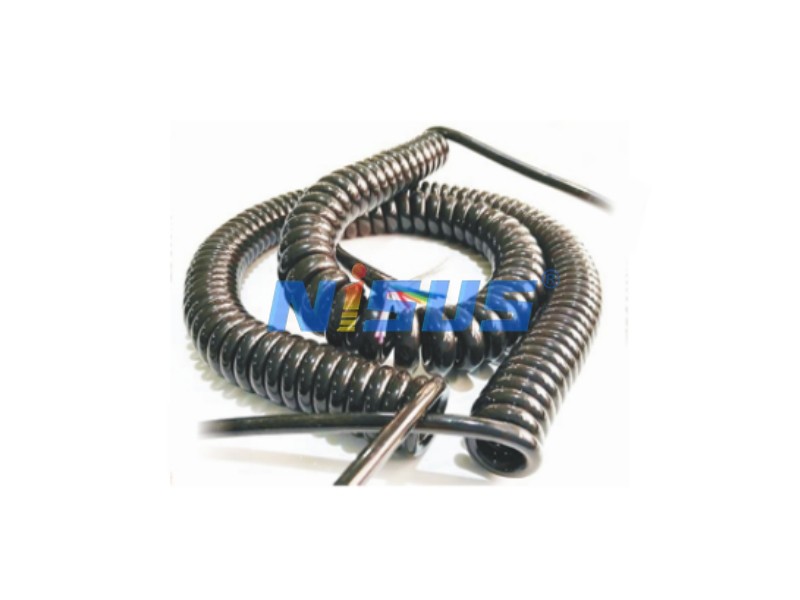
What Is an Inductor Coil? How It Stores Energy and Its Uses
Aug 21, 2026
An inductor coil is a passive electronic component. Manufacturers build this device by winding insulated wire into tight loops. When electric current flows through the wire, you store energy inside a localized magnetic field. The component also opposes rapid changes in electric current. Engineers measure inductance in Henry, denoted by the symbol L.
How an Inductor Coil Works and Stores Energy
Magnetic Flux and Energy Storage Mechanics
When you pass an electric current through tightly wound insulated wire, you create a concentrated magnetic field around the conductor. This magnetic field expands outward and stores electrical energy directly within its magnetic flux lines. The amount of stored energy depends on two primary factors: the physical inductance value of the component and the magnitude of the flowing current.
You calculate this stored magnetic energy using the formula: energy equals one-half times inductance times the square of the current (E = 0.5 * L * I^2). In this mathematical relation, you measure energy in Joules, inductance in Henrys, and current in Amperes. Higher electric current dramatically increases the stored energy because the energy scales with the square of that current.
An Inductor Coil also exhibits a unique electromagnetic property known as self-inductance. When the internal electric current changes, the expanding or collapsing magnetic field cuts across the wire turns. This moving field induces a secondary voltage across the component itself. According to Lenz's Law, this induced voltage—often called back-electromotive force or back-EMF—always opposes the original change in current.
If you try to increase the current rapidly, the back-EMF pushes back against the incoming flow. Conversely, if you attempt to drop the current suddenly, the magnetic field collapses and releases its stored energy to maintain current flow. This core physical mechanism allows the device to act as an electrical flywheel inside modern circuits.
Inductor Behavior in AC vs. DC Circuits
You will observe vastly different behavior when you place an Inductor Coil into direct current (DC) circuits versus alternating current (AC) circuits. Under steady-state DC conditions, the current flow remains completely constant over time. Because the current does not change, the magnetic field around the winding stays entirely stationary.
Since a stationary magnetic field produces zero back-EMF, the component stops opposing the current flow once the initial field builds up. The wire loops then act as a simple, low-resistance conductor, essentially behaving like a short circuit to steady DC power signals.
In contrast, alternating current continuously flips direction and changes magnitude. This constant variation forces the magnetic field to continuously expand and contract. The component continuously generates back-EMF, creating an opposition to alternating current known as inductive reactance.
Inductive reactance increases directly with signal frequency. At high frequencies, fast-changing signals face immense opposition, effectively blocking those AC signals. At low frequencies, slowly changing signals pass through with minimal opposition. You can utilize this frequency-dependent behavior to smooth out erratic power supplies or isolate specific signal channels in electronic circuit design.
Inductor Coil Applications and Circuit Design
Power Conversion and Signal Filtering
You will find an inductor coil in almost every modern electronic device. In DC-DC power converters, these components regulate voltage levels efficiently. The converter switches electric current rapidly on and off. During the on cycle, the magnetic field inside the winding stores energy. During the off cycle, the field collapses and smoothly delivers current to the output load.
Inductors also serve as essential filters for electric signals. Power supply circuits use low-pass filters to remove high-frequency electromagnetic interference noise from dirty power lines. The component blocks fast voltage spikes while allowing clean direct current to pass safely. In radio frequency systems, engineers combine inductors with capacitors to create resonant tuning circuits. These circuits isolate specific communication frequencies while rejecting unwanted signals.
Key Selection Factors and Core Saturation
When you select an inductor coil for real circuits, you must evaluate physical limits beyond basic inductance values. Core saturation represents a major hazard in power circuit design. Every magnetic core material handles a maximum limit of magnetic flux density. Excessive current pushes the core past this limit, causing magnetic saturation. Inductance then drops instantly, and excessive current flows through the circuit without control.
You must also consider Direct Current Resistance and parasitic capacitance. The copper wire windings inherently possess a small internal resistance. This resistance generates heat and reduces overall power conversion efficiency. Additionally, close physical spacing between individual wire loops creates unwanted parasitic capacitance. At high operating frequencies, this internal capacitance bypasses the inductive properties entirely and compromises circuit stability.
An inductor coil stores energy in a magnetic field through self-inductance. You use this component to block rapidly changing AC signals while letting steady DC pass smoothly. This unique behavior enables efficient power conversion and signal filtering. Always check magnetic core limits, wire resistance, and parasitic capacitance to ensure stable performance in your electronic circuits.
FAQ
Why does an inductor coil oppose sudden changes in current?
An inductor coil generates a back-EMF through self-inductance whenever current changes. This induced voltage directly opposes the change to maintain stable electric flow in your circuit.
What happens when you apply steady DC to an inductor?
Steady DC creates a constant magnetic field. Without field variations, the component produces zero back-EMF. It acts like a low-resistance wire, allowing the current to pass freely.
How do core saturation issues affect your circuit performance?
Excessive current overloads the magnetic core capacity. Inductance drops rapidly during saturation, causing high current surges that can damage your surrounding electronic components.
Read More